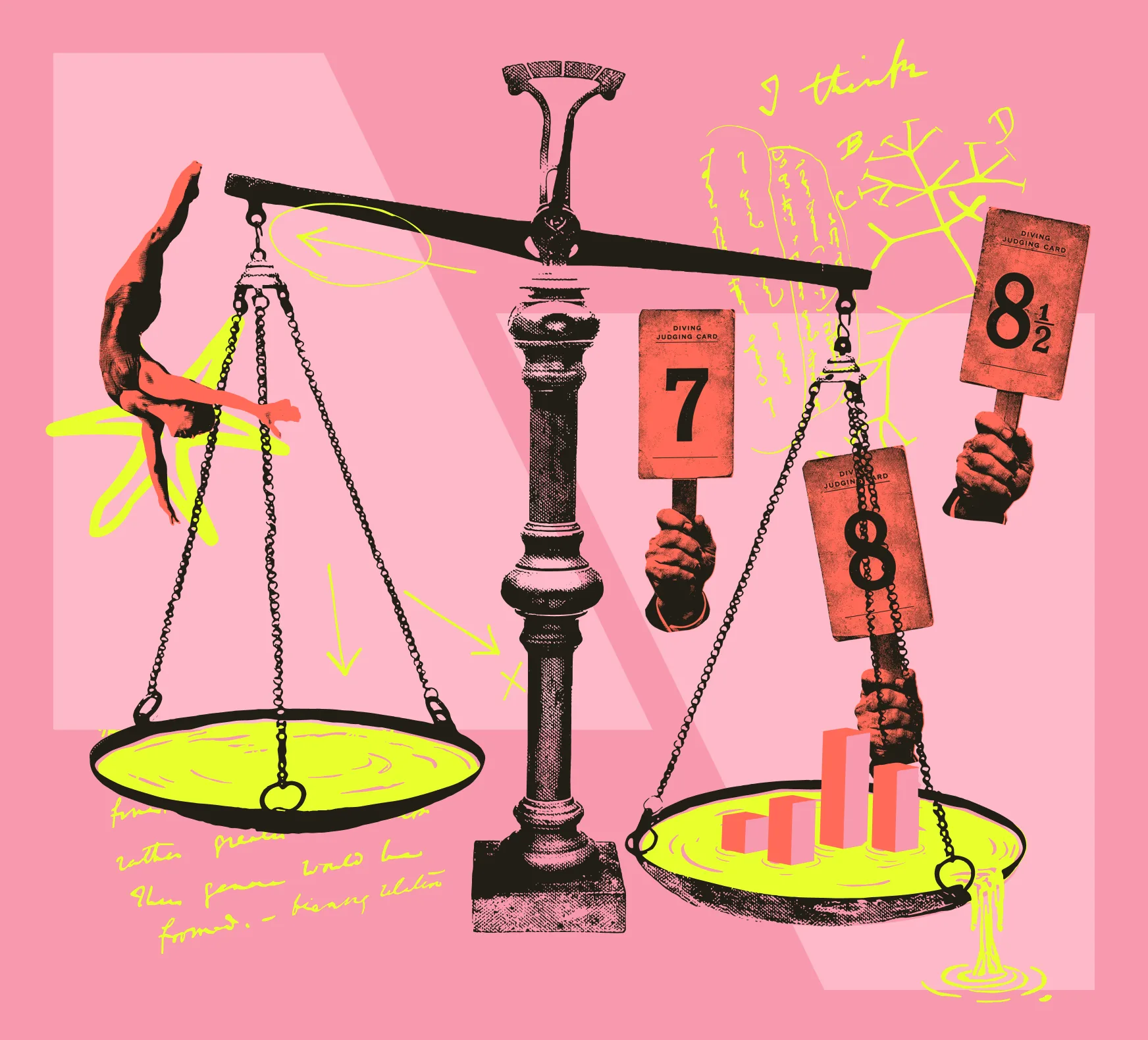
Have you had a moment, while experimenting with AI, when it felt like you’d tapped into a superpower you didn’t have before? Like you had access to magic?
In tech circles, this is called getting “AI-Pilled,” a riff on “red-pilled” from the Matrix films. It’s defined as “a rite of passage where an individual becomes fully awakened to AI’s possibilities, often triggered by an intense hands-on session, sometimes leading to a sleepless night of experimentation and awe.”1
It turns out this isn’t just a tech-insider experience. In our last piece, we argued that the second stride with AI depends on people with the agency to go after new growth. Since then, we’ve read over 500 people’s own accounts of working with AI, in published research and online forums as well as talked to many senior leaders in organizations large and small. The same moment keeps showing up for knowledge workers of every kind. We call it the AI Aha.
This aha is where a person’s relationship with AI begins. What happens next, and what their organization lets happen, determines whether the AI investment buys productivity alone, or productivity and possibility, both strides.
What It Feels Like
People don’t describe the aha as a tool or feature they discovered. They describe a feeling. “I walked around with a stupid smile for 2 hours realizing possibilities had opened up whose limits I don’t yet fully understand.” An entrepreneur who rebuilt his website in four languages in five weeks put it simply: “I’m in my sixties... I don’t see any limit anymore.”2
Senior leaders feel it too. One CEO told us he spends weekends going down an “AI rabbit hole” and his kids have to pull him out of it. Another uses AI to tinker with the tech in his home and describes the same feeling, seeing what AI can do with him in the driver’s seat.
Across hundreds of stories, three things show up again and again:
- It starts with a problem you’re stuck on. Typically a personal one away from your day job, where the stakes are low and it’s safe to be messy.
- You feel it in your body. A smile you can’t shake, goosebumps, a weight lifted. The aftershock lasts hours, sometimes days.
- It’s a team of one. “With Claude I’m 10x faster alone.” Many feel a flash of guilt, as if they’re cheating, so they keep it to themselves.
If you’ve had this moment, you know exactly what we mean. If you haven’t, you’re in good company, and it may be the missing piece in your AI transformation.
Then Comes the Dread
The aha rarely arrives alone. Right behind the awe comes a quieter, heavier question…what does this mean for me? For my job? For the world?
We’ve felt it ourselves. The first time one of us watched AI produce, in minutes, the innovation opportunity areas a whole team had worked hard on, the first thought wasn’t “wow.” It was “I need a new profession.” Others name the phase outright like this Reddit user, “If you haven’t gone through a dread phase, you either don’t really believe AGI is possible, or you don’t understand even a little bit of what it would mean.” Or this knowledge worker, “If AI becomes better than us at everything, what’s left for me to do but breathe and hope someone takes pity on me?”
This is normal, and almost nobody talks about it openly at work. It isn’t safe to say “I’m worried about where this is going” in most organizations. But the dread matters, because it’s where the road splits. What people do with that feeling, and what their organization lets them do, decides where they end up.
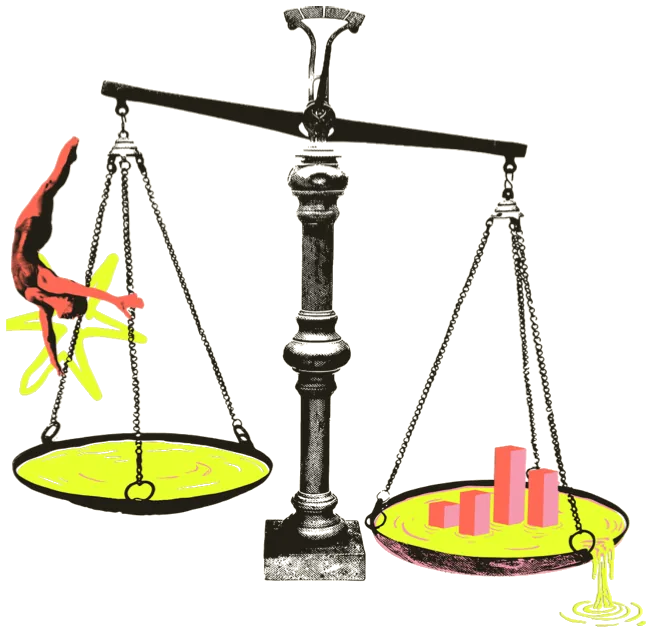
After the Aha, a Fork in the Road: Agency or Autopilot
One entrepreneur in Anthropic’s study of more than 80,000 AI users2 explained the fork better than we could… “Humans gain apparent agency — I can do more, faster, easier. But they lose real agency: the capacity for independent thought, synthesis, judgment.”
We call the two paths agency and autopilot. On autopilot, AI becomes just another wheel to turn: you put a prompt in, review it quickly, send what comes out, and call it a day. Nobody is really steering. On the agency path, you’re using innate human abilities like inquiry and judgment to use AI to stretch what you can do.
We’ve found that which path someone takes is rarely a personal choice. It’s mostly shaped by the organization around them.
The aha mostly happens on side projects, not in the day job. As one person on Reddit put it, “It feels great for side projects, but for my professional (paying) work, it still feels icky.” The payoff follows the same pattern. In Anthropic’s study2, 47% of independent workers reported real economic empowerment from AI, compared with just 14% of institutional employees. They are using the same tools but the difference is the system around them.
There are two roads into autopilot:
- The aha gets dimmed. People who’ve had the moment carry it into work, and it loses its shine. It’s the strategist who can now size an opportunity in minutes instead of weeks but then waits for four approvals and a steering committee that doesn’t meet until next quarter. The work got faster, but the organization didn’t. Then you layer a lack of clarity around the rules of use and a fear of being seen as cheating and people stop trying or keep trying and hide it. In one study3, 69% of professionals mentioned stigma around using AI at work. As one fact-checker said, “I don’t tell anyone my process.”
- The aha never comes. People who haven’t had the moment use AI anyway with limited experience in what’s possible. They simply do what the organization rewards, more output, faster.
-
01 / 05

The AI Aha
A felt moment of new power.
“I walked around with a stupid smile for 2 hours realizing possibilities had opened up whose
Knowledge worker
limits I don’t yet fully understand.” -
02 / 05

The dread
What does this mean for me?
For humanity?“If AI becomes better than us at everything,
Knowledge worker
what’s left for me to do but breathe and hope someone takes pity on me?” -
03 / 05

The fork
Your organization influences whether the aha grows or fades.
“Humans gain apparent agency — I can do more, faster, easier. But they lose real agency: the capacity for independent thought, synthesis, judgment.”
Entrepreneur -
04 / 05

Agency
Productivity and possibility, shared.
“It’s not AI giving me ideas — it’s me discovering ideas myself, as AI writes the code. Since I could think faster than I could build, my range of ideas has grown.”
Entrepreneur -
05 / 05

Autopilot
Faster work but less thinking.
“My general critical thinking is a lot worse now, even though I’m still performing on output.”
Software engineer
The aha is the spark. It is up to the organization to turn that into agency.
The symptom is something every reader has received, workslop, AI-generated work that looks polished but doesn’t move anything forward. In a BetterUp and Stanford Social Media Lab survey4, 40% of U.S. desk workers said they’d received it in the past month, and each instance took about two hours to sort out. The researchers connect much of it to leaders mandating AI use without clear guidance. And we would argue they likely don’t have the right structures or culture to help it thrive. People get the tools, but not the conditions to support a new way of working.
Autopilot also costs the people on it. Microsoft found5 that the more confidence knowledge workers had in AI, the less critical thinking they reported. One software engineer described the trade-off plainly: “My general critical thinking is a lot worse now, even though I’m still performing on output.”2
What Agency Looks Like
Agency isn’t the opposite of productivity. It’s both strides at once. Faster at the work you already do, and capable of work you couldn’t do before.
In the accounts we read, people on this path look different in four ways:
- They stay in charge. They ask the questions, test what comes back and make the call. And they feel safe enough to push back when the AI’s answer seems wrong.
- Their work is seen. A report their boss praised, a business case that got funded, a tool rolled out to other stores. Pride showed up when the work was visible; guilt showed up when it stayed hidden.
- They bring others with them. They share how they did it instead of racing ahead alone.
- They stretch. One online shop owner now tries “something that is slightly beyond my current abilities.” Another found themselves becoming “the developer, director, animator, 3D artist, writer.”
That growing range of what one person can do is where we’re headed in our next piece.
How We Create the Conditions for Agency
If the organization shapes which path people take, leaders shape the organization. And right now, your people are looking to you for direction. Where is this going? What’s our part in it?
That’s a hard question to answer. Most of the AI conversations leaders have had are about data, infrastructure and governance. Very few are about their own experience of the technology. And it’s hard to set a vision when the ground shifts every week, so many organizations slip into reacting instead. Many leaders feel their own version of dread, when years of experience are challenged by a junior colleague with an AI analysis.
You don’t need to know exactly what the future looks like to choose where you want to go. As one senior leader put it to us, the question isn’t how to react to the future, it’s how to aim toward the future you want. That’s far easier to answer once you’ve felt the possibility yourself.
But vision alone isn’t enough. What decides whether your people’s energy turns into results is whether leaders back it with real resources, permission and cover when risks are taken and things get messy.
That’s why we start with leaders, and why we don’t stop there. The aha is the spark. Our real work is making sure it lands on the agency path. We step in at two points on the journey.
The aha is the spark. Our real work is making sure it lands on the agency path.
1. Design the aha, starting with leaders. Not to test what you know, but to give you the moment first. Each leader brings a personal problem they’re genuinely stuck on, away from the business, and builds their way through it. We make room for the dread too, because naming it out loud is what lets people move past it together. Leaders leave having felt the possibility for themselves, ready to set a direction for their teams and lead from experience. Those who’ve already had their aha become the people who help others get there.
2. Change the conditions at work. A small cross-functional team takes on a pressing strategic initiative alongside us. It isn’t training, and it isn’t a pilot. It’s real work, so more ahas happen where they matter, not on side projects. We set it up for agency from day one:
- Work in the open. Ideas build on each other instead of hiding in private chats.
- Make it safe to experiment. Leaders reward people who go beyond their role, instead of judging them for using AI.
- Let the work reveal the blockers. What gets in the team’s way shows the organization what to change, based on evidence instead of opinion.
- Get a proof point fast. Early visible wins turn the team into ambassadors and evangelists, and that’s what helps it spread.
That’s how private sparks become a new way of working: one leadership team, one initiative, one team at a time.
The Question Worth Asking
Most of your people will have their AI moment sooner or later. The real question is what your organization does with it. Will it let the aha fade into autopilot, or turn it into agency?
If you want your people’s aha to build agency, not just speed, let’s talk.
Sources
- 1The Dictionary of Present Futures. (January 5, 2026). “AI-Pilled.” (opens in a new tab)
- 2Huang, S., et al. (March 18, 2026). “What 81,000 People Want from AI.” (opens in a new tab) Anthropic.
- 3Anthropic. (December 4, 2025). “Introducing Anthropic Interviewer.” (opens in a new tab) 1,250 interviews with professionals.
- 4Niederhoffer, K., Kellerman, G. R., Lee, A., Liebscher, A., Rapuano, K., & Hancock, J. T. (September 22, 2025). “AI-Generated ‘Workslop’ Is Destroying Productivity.” (opens in a new tab) Harvard Business Review. BetterUp Labs and Stanford Social Media Lab survey of 1,150 full-time U.S. desk workers.
- 5Lee, H.-P., Sarkar, A., Tankelevitch, L., Drosos, I., Rintel, S., Banks, R., & Wilson, N. (April 2025). “The Impact of Generative AI on Critical Thinking: Self-Reported Reductions in Cognitive Effort and Confidence Effects From a Survey of Knowledge Workers.” (opens in a new tab) Proceedings of CHI ’25. ACM.
Next Coming in December
How We Think →